
During the mindless scrolling I now count as a necessary part of my pre-writing ritual, I came across the screenshot of a LinkedIn post that is now being used as engagement bait for a feminist audience. The LinkedIn post was part of a now familiar genre that familiarises an audience with how to mobilise AI to maximise their efficiency and productivity. In this case, the author explained how, on struggling to find loving words to fill an anniversary card for his wife, he turned to AI for inspiration. The success of this venture led the author to automate his intimacy: he set up an AI agent to text his wife romantic messages at pre-set times. This, he claimed, was not a failure of feeling; it simply allowed him to automate the work of maintaining his marriage. One hopes the original piece was satire. Regardless of the original intention, the feminist commentariat responded to the post by describing it as a dystopian vision of married life. Some things should not be outsourced.
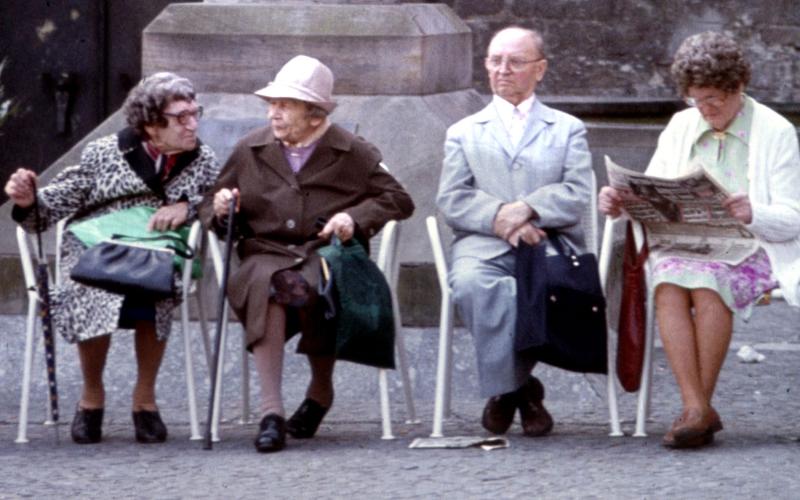
This response is familiar. Modern social media commentariats – perhaps ironically – have articulated scepticism at the capacity of new technologies to limit loneliness or provide care. Indeed, the internet-savvy may be more resistant to artificially generated feeling than other groups.[1] Yet, while the idea of outsourcing our emotional labour to an AI agent may provoke an instinctive disgust or horror, why exactly do many react this way? After all, love is marked not just by language, but also by practices.[2] The spouse who brings a cup of tea or coffee to a bedside every morning; who does the weekly laundry; who forwards a humorous internet meme around a shared joke, could be identified as loving without ever having to verbalise their loving intentions.
Why then might an automated text message fail? The routine quality of the communication is not inherently problematic; indeed, in many instances, repetition is considered essential evidence of love’s constancy. Automation, itself, might even be acceptable, such as in a pre-set weekly flower delivery to a beloved. Perhaps then it is the deployment of another’s (or another thing’s) words. Yet people commonly resort to a Hallmark Valentine’s Day card with pre-printed affections, thereby redeploying another’s words to express love’s ineffability.
We might suggest then that our disdain here arises less from the technological innovations of AI, and more from its use to automate the communication of human affection. We might be less concerned if the recipient was aware that it was an AI text and experienced its receipt as an aide memoire for an absent loved one. The problem is perhaps whether such messaging is deceitful – our concern arises from the ways the text message’s immediacy suggests that someone is thinking of us in the moment, not at another time, and the willingness of the AI user to give that impression. We might be less resistant in a decade’s time when we have resigned ourselves to the reality that much of our daily correspondence is now mediated through a machine. We are now comfortable with receiving an affectionate email, instead of a letter personalised through paper choice, handwriting, even a kiss, or with using an online dating site as an entry point to a new relationship.
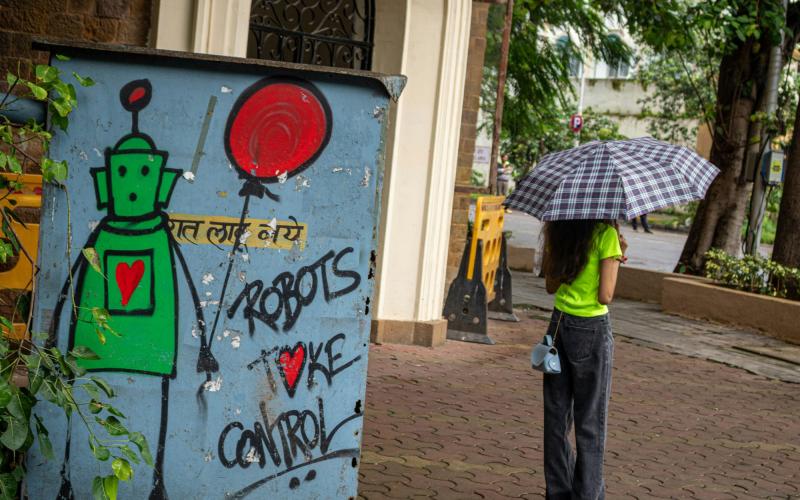
The anxiety that internet commentators voice about using AI to express love is embedded within broader apprehensions. The possibility that technology might step up to assuage a more general emotional problem has provoked concern, even disbelief, many times over the last century. From books to radio to tv to sex dolls to robots to AI companions, the idea that technologies might offer succour for the lonely and community for the isolated has been met with complaint. At the same time, most of these technologies have seen uptake – some on a very large scale – by parts of the population. The radio that was marketed as providing comfort to the lonely housewife in the early twentieth century quickly became the incidental background noise of our childhoods, car journeys, and working lives.[3] AI companions are now rolling out in larger and larger numbers.
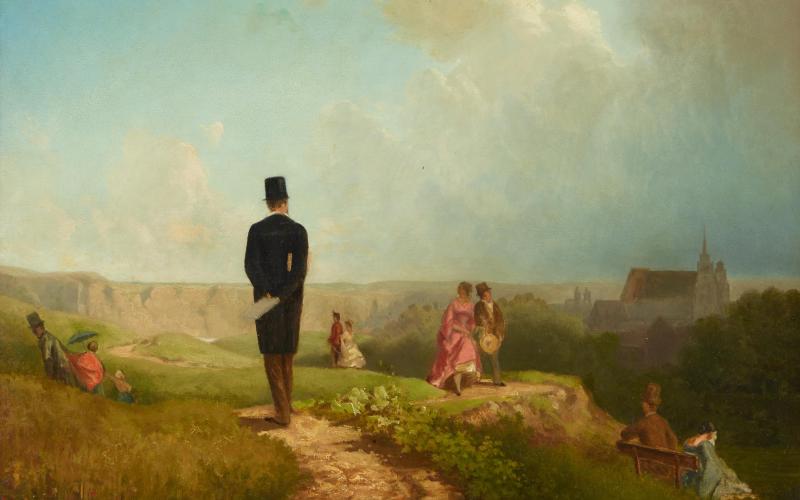
The trepidation with which we approach new technology is not just Luddism, but reflects how we imagine the modern self and its capacity to connect with others (or not). A number of historians have argued that something new happens to the self with modernity. The person comes to recognise themselves as an individual, separate from others, with a core interiorised and reflexive selfhood. This self becomes ‘disengaged’, to use the philosopher Charles Taylor’s words, from its body and environment, able to judge its own perceptions and behaviours, and to exercise control over the passions.[4] This self might be seen as particularly prone to loneliness. As existential philosophers have lamented, our capacity to overcome the boundary between the (modern) self and ‘the other’ leaves us existentially lonely – we can never truly know or join in union with the interiorised self of a beloved.[5] The gap between the self and the body/environment extended to our relationships.
The modern self was also one that was now understood to be made, rather than reflecting the inheritance of a pre-existing human nature as earlier generations of Europeans had thought. The disengaged self originated either as a ‘blank slate’, following John Locke, or a set of basic drives and instincts for later scientists, and made sense of the world through the body’s perceptions, growing in knowledge with age and experience. The self was given form by its environment: the family that provided love and care; the economic system that left it hungry or satiated; and the tools and technologies that came to expand and enhance its capacities, extending the body beyond its natural boundaries.[6] The made self was encouraged to compensate for its existential loneliness through its social relationships, material goods, and technological practices.
Technologies offered potent possibilities as aids for the modern lonely self. Aligning with industrialisation and growing access to cheap consumables, the modern self gained access to a repertoire of new commodities through which to make sense of itself and find comfort. Wealthy Victorians filled their homes with soft furnishings and household goods, which supported social rituals, but also came to be associated with ideas of comfort and belonging. The lonely self could at least be warm and comfortable. Increasingly material goods also became markers of identity. Fashion and style now spoke to class, sub-culture identities, even sexuality. Goods, and therefore technologies, provided a mechanism through which the interior self was externalised for others, and so through which belonging and community could be created.
Given the willingness of the modern subject to extend itself through things, the anxiety that modern people express at new technologies designed to support love or address loneliness might seem rather odd. Yet, perhaps instead, we should see such concern as arising from our willingness to extend the self in such ways. Part of the underlying unease with using technologies to create love and address loneliness is that we are trying to replace work that we instinctively believe should, indeed must, be done by humans. New technologies provide a simulacrum of an experience that requires genuine human connection. If this is the case, evidence suggests that we actually use technology in this way on a regular basis. Perhaps then our anxieties are less with automated AI systems than an appropriate cautiousness towards any new and untested technology that will play a part in extending the modern self and so shaping ourselves and our relationships. How our AI-generated text and its automated affections will be received by our spouse is still to be determined.
[1] Katie Barclay, Loneliness in World History (London: Routledge, 2025), 93-94.
[2] Sally Holloway, The Game of Love in Georgian England: Courtship, Emotions and Material Culture (Oxford: Oxford University Press, 2019).
[3] Ruth Palter, ‘Radio’s Attraction for Housewives’, Hollywood Quarterly 3, no. 3 (1948), 253.
[4] Charles C. Taylor, Sources of the Self: The Making of the Modern Identity (Cambridge: Harvard University Press, 1989).
[5] Ben Lazare Mijuskovic, Loneliness: Philosophy, Psychology and Literature (Bloomington: iUniverse, 2012).
[6] James R. Farr, ‘The Self: Representations and Practices’, in: The Routledge Companion to Cultural History in the Western World, ed. Alessandro Arcangeli, Jörg Rogge, Hannu Salmi (London: Routledge, 2020), 270-291.
Zitation
Katie Barclay, Love, Loneliness and Automated Systems of Affection, in: zeitgeschichte|online, , URL: https://www.zeitgeschichte-online.de/themen/love-loneliness-and-automated-systems-affection