
In a recent interview, Götz Aly points out that German historians, writing about the Nazi period, generally “do not have families” while Jewish colleagues have.[i] German historians, if dealing with the Nazi past, prefer to wrap their family histories in silence, apprehensive as they may be about publicly revealing them. The workshop History that hurts. Academics confronting their family histories: methodological and ethical inquiries (held on 25-26 September 2025 in Regensburg), was intended as a modest step towards addressing this common reticence, bringing together historians and anthropologists who have begun to explore their ancestors’ histories.[ii] All participants belong to the third generation that grew up with troubled and tainted family histories. Even though transmitted one way or another, past experiences often remain hidden and obscured.
The workshop participants started at some point in their lives exploring these family narratives and gaps not only as family members but as trained researchers. As this transition — from personal family legacy to in-depth scholarly investigation — raises various methodological, epistemological, and ethical questions, the workshop was intended to provide an opportunity to discuss the ins and outs of doing research on one’s relatives. To provide a safe space for intimate conversations, the workshop was closed to the public, except for the keynote speech delivered by Julia Gilfert (Eberhard Karls Universität Tübingen), author of a book that covers the history of members of her family during the Nazi period.[iii] The book tells the story of how she, as a young woman, uncovered the circumstances of her grandpa’s death as part of the National Socialist euthanasia programme, with some other family members being complicit in the killing of her grandfather.
In her keynote, she reflected on how she grappled with the fragmentary nature of the material, exploring how historians can engage productively with the gaps, silences, and unknowns. Her talk highlighted the role of ‘found’ objects, and reflected on the challenge, as a descendent, of being personally and emotionally affected by one's research. The theme of being ‘implicated subjects’ (Michael Rothberg[iv]) with strong attachments to our families’ histories, was, at the end of the workshop again picked up by Alexandra Senfft, who — as the author of an acclaimed family history revolving around her grandfather who had been a high-ranking Nazi official — commented on all presentations. She pointed out that we are all products of our families’ histories: we have grown up with conspicuous silences and taboos as well as lies and stories that we are supposed to believe. We are also faced with conflicting double-bind messages, where one thing is said and the non-verbal communication brings across something else. All participants indeed talked about their forefathers’ involvement in the Nazi project having had sustained repercussions for family life and relationships during and long after the war. All grew up with troubled family histories which had a lasting effect on the next generations. That is why we may be bent on breaking the silence, how hurtful and distressing this may be for us. Senfft indeed suggested that we may be driven to explore these suppressed histories because they have been ‘passed on’ or ‘delegated’ to us as a kind of ‘silent or unspoken assignment’. These realities that we uncover may trigger unpleasant feelings and force us to realize that history hurts.
Besides sharing family histories, the workshop participants were also asked to bring an object that triggered and shaped the research on one’s own family, reinforcing or disrupting an inherited narrative or suggesting new avenues for the exploration of our family’s history. A document, letter, photograph, military medal, a piece of clothing, or an everyday household item passed down the generations, can act as a bridge between past and present, between personal recollection and scholarly investigation. Specific traces, places, and rescued or found objects (in addition to written or oral sources) may indeed help to reconstruct family history. They are the most physical and tangible embodiment of these past realities.
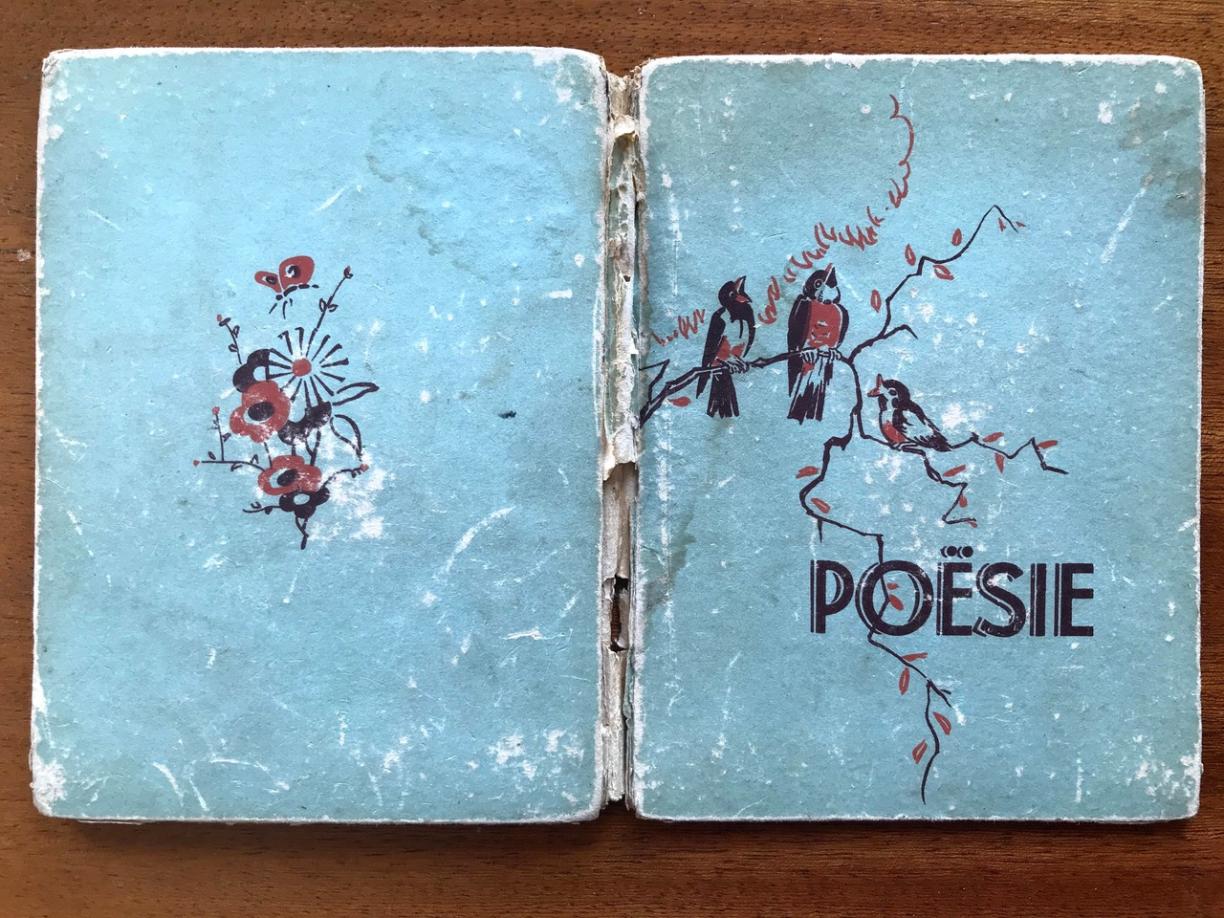
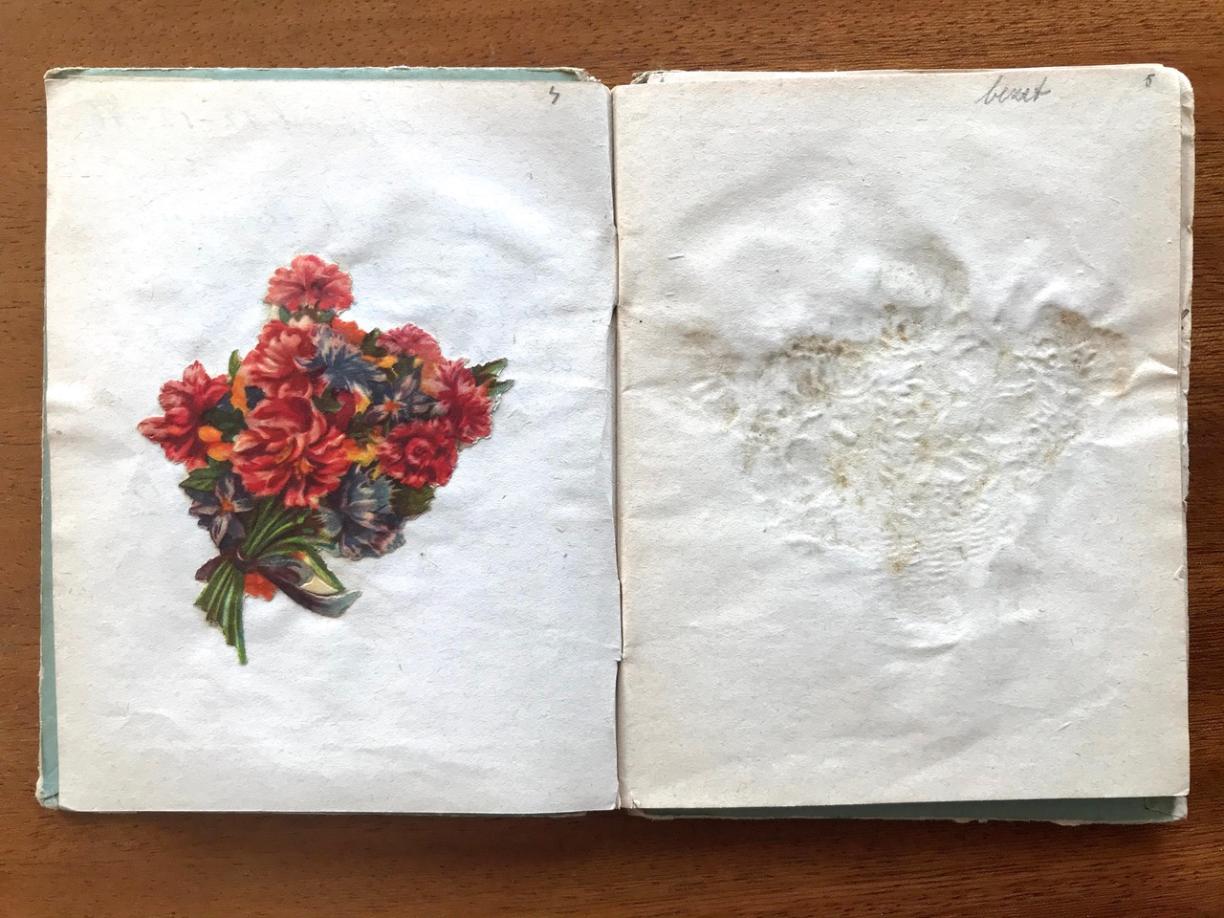
Ger Duijzings spoke about his grandfather who joined the National Socialist Movement (NSB) in the Netherlands, becoming a local NSB official in Maastricht during the German occupation. The reason for Ger to start investigating his grandparents’ role before and during World War Two was that his mother had been rejected by her parents. As Ger, like his mother, had hardly any contact with his grandparents, he only learned about them through the archival research he carried out, attempting to answer the question that kept his mother preoccupied throughout her life: why was she not accepted by her parents and raised by her grandparents? (Filling out the empty pages in the story of an abandoned child: Why was my mother rejected by my (Nazi) grandparents). Ger presented his mother’s poetry (‘poësie’) album which she kept like all teenage girls, containing one blank page reserved for her mother, the emptiness of which exemplifies the silence and her failed quest for answers.
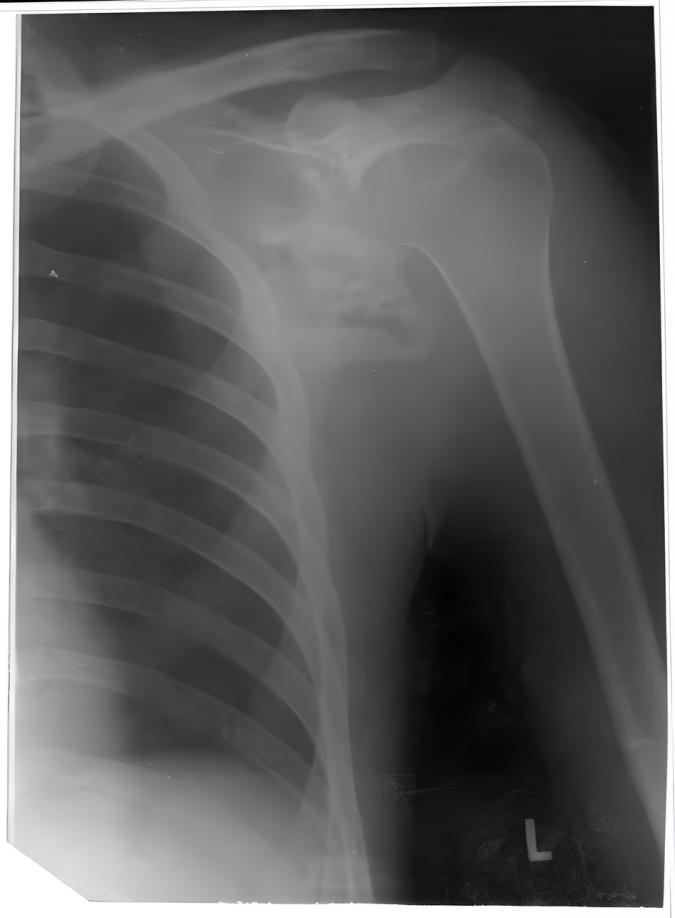
In her talk, Heike Karge traced the wartime trajectories of both her grandfathers and the silence that shaped her family’s relation to the Nazi past. As her salient object, she brought an X-ray with her, preserved in the Federal Archives, showing the gunshot injury of her paternal grandfather. Leaving a visible scar, the wound became the one and only material trace of his participation in the war that disrupted an otherwise almost total family silence. Following his trajectory from occupied France to Croatia, as well as that of her maternal grandfather at the Eastern Front, Heike examined what can and cannot be reconstructed from the available military and medical files. She also explored how historians can deal with absences and ethically troubling forms of attachment when we are investigating close relatives. Drawing on the concepts of postmemory, perpetrator trauma, and intergenerational silence, she reflected on the muteness of perpetrators and bystanders, and of those people who simply ‘went along’ with the regime (The Wehrmacht records of my grandfathers and the continued silence in my family). The scar of her grandfather is both a bodily trace and a methodological point of departure for confronting that inherited and deliberate ‘not knowing’ in her family.
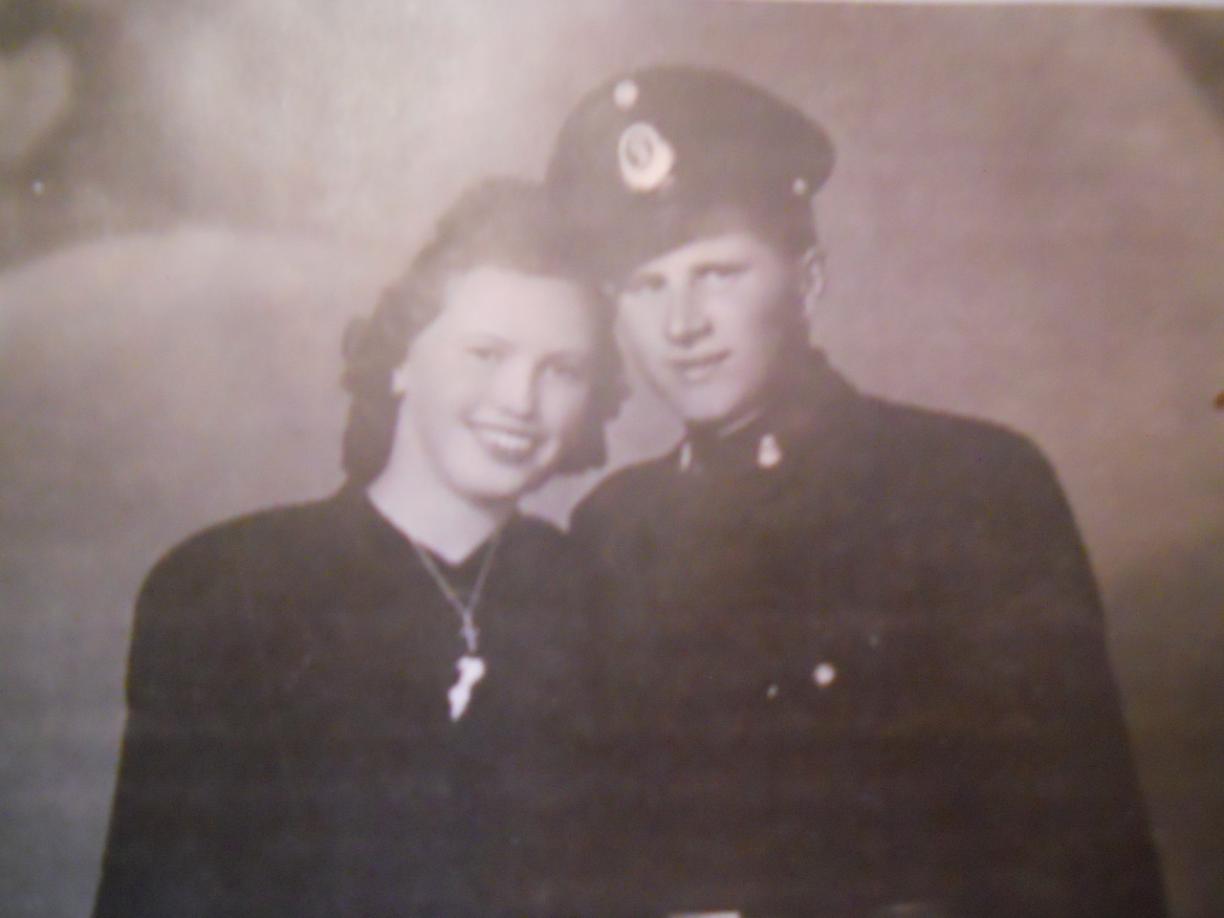
Vjeran Pavlaković spoke about his efforts to track down the fate of his paternal grandfather, who disappeared in the final days of the Second World War. He was a police officer of the collaborationist Ustasha regime in the Independent State of Croatia (NDH) and was last seen fleeing towards Zagreb as Tito’s Partisans approached. As his grandmother remarried after the war, the loss of her husband was not discussed, and only decades later Vjeran began to investigate the Croatian State Archives to try and solve this family mystery. Family stories suggested he may have been captured and executed by the Partisans, despite any proof regarding his fate. Newly opened archives of the Yugoslav intelligence services (OZNA) and post-1991 commissions investigating communist crimes hardly did offer additional clues. Vjeran described his quest in various archives, which was accompanied by the fear of finding evidence of Mirko’s complicity in Ustasha crimes (“I’m hoping I don’t find anything”: Memory, history, and archival work on a dark family past). The continued lack of evidence has left ample room for speculations about his grandfather’s fate, including the possibility that he was not killed because of Partisan vengeance, but escaped and started a new life elsewhere under an assumed name and identity.
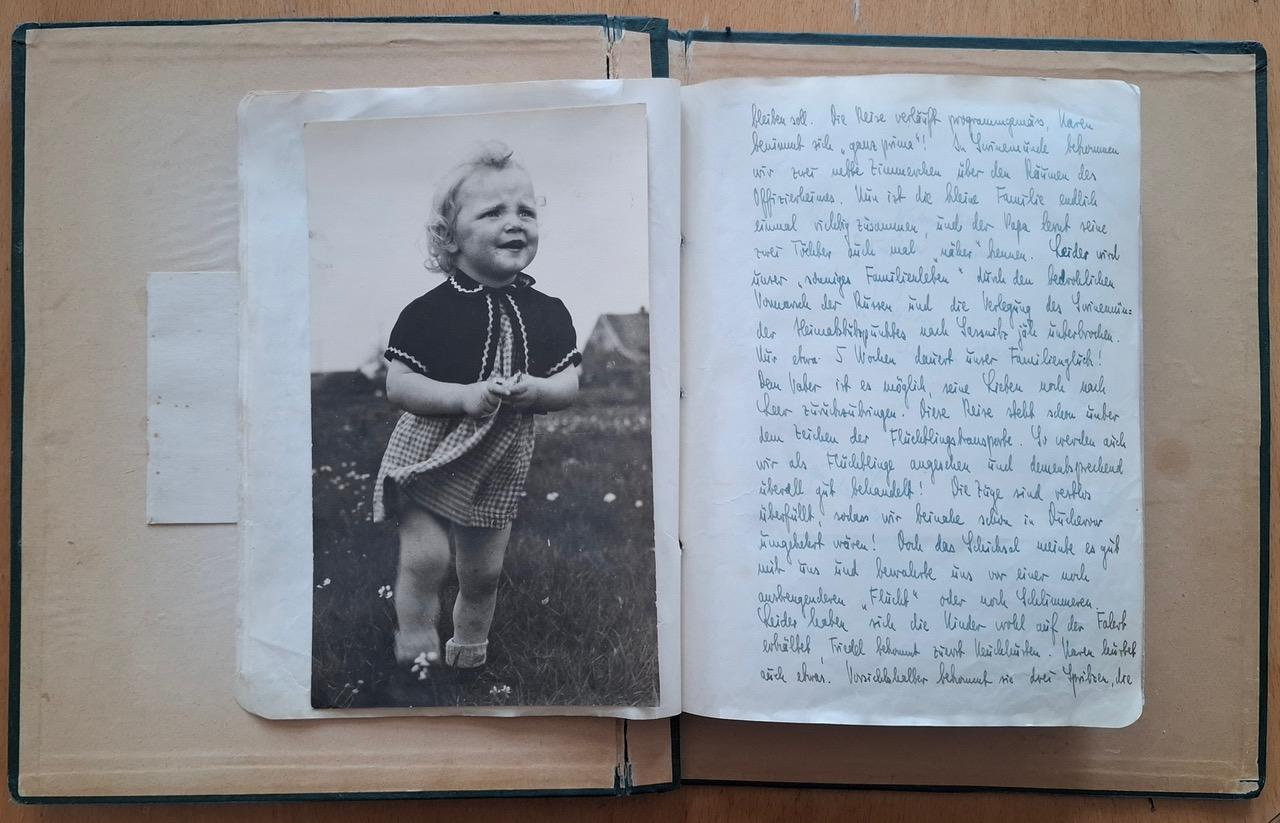
Finally, Natali Stegmann started her explorations with thoroughly researching the family history of her mother, turning her attention to that of her father only at a later point in time. After completing a comprehensive essay on her years-long search, she found her mother’s early childhood photo album with comments written by Natali’s grandparents during the last year of World War Two and the early postwar years. Natali put the discovery of the photo album and the information contained there at the centre of her contribution (My grandparents confessing the early childhood of my mother during and after the end of World War Two). The album documents far more forcefully than the stories passed down later ever did, how this young family was forced to navigate moments of defeat after the war. It testifies to the difficulties of losing their ‘respectable’ Nazi positions in the Bund Deutscher Mädel (League of German Girls) and the navy, and of having to relinquish their former Nazi convictions and certainties. It also transpires in the pages how traumatic these events must have been for Natali’s mother (born in 1944) and her older sister.
The workshop’s purpose was not to seek to present personal stories for their own sake, but rather to examine how trained historians engage with their family histories facing various intellectual, historiographical, methodological, and ethical challenges. Some of the questions raised were: How do we navigate the tension between critical analysis and emotional attachment? How do we fill the gaps and patch together our family histories from fragmented and limited sources? What kind of historical truths and what kind of narratives do we construct, what are our (hidden) agendas, and do we work differently when exploring our own family’s histories? How do we deal with feelings of shame and guilt, and what are the ethical implications and pitfalls of such endeavours? How do we work with this ‘private’ material, are we willing to disclose it to a wider audience, and how do our families respond to that? Are we willing to expose our families’ histories and breach the code of silence (the ‘omerta’) that is imposed on us? (facing the consequences, such as being excommunicated from the family as happened to Alexandra Senfft). How does all this shape our understanding of belonging and family loyalty on the one hand, and professional responsibility and detachment on the other? Finally, does our family history have something to do with the career choices we made, since many of us ended up studying wars, genocides, and post-war traumas (related to World War Two, the Shoa and Nazi atrocities committed at the Eastern Front, the wars in the former Yugoslavia or Srebrenica).
After listening attentively to the stories that had unfolded during the day, Alexandra Senfft commented on all the presentations, sharing her observations and theoretical considerations. She is the author of the highly acclaimed family history Schweigen tut weh: Eine deutsche Familiengeschichte (2007) as well as Der lange Schatten der Täter: Nachkommen stellen sich ihrer NS-Familiengeschichte (2016).[v] In addition, she collaborated with Dan Bar-On, an Israeli psychologist and therapist who initiated and facilitated German-Israeli and Israeli-Palestinian dialogues, encouraging people to share their painful stories and listen to others.[vi] Dialogue in conflict is understood as part of a process of understanding and rapprochement in the spirit of active peace work. Working with him, Alexandra gained much experience in terms of listening to the stories of victims and perpetrators alike. She explained that the transition from monologue to dialogue offers opportunities to move ahead: from solely confronting one's own history to listening and empathizing with others, sharing and exchanging one's thoughts and thereby giving them another quality.
[i] Historiker Götz Aly über die Nazis & Deutschland 1933 bis 1945, Jung & Naiv, Folge 781, available online.
[ii] See also Johannes Spohr (Hrsg.). Present Past: Wie Nachfahren ihre NS-Familiengeschichte erforschen. Berlin: Metropol Verlag, 2025. The workshop was organised by Natali Stegmann (University of Regensburg), Ger Duijzings (University of Regensburg) and Heike Karge (University of Graz). It was made possible by the generous financial support received from the Leibniz ScienceCampus Europe and America in the Modern World (Regensburg), the Center for Commemorative Culture (University of Regensburg) and the Faculty of Philosophy, Art History, History and Humanities (PKGG) of the University of Regensburg.
[iii] Julia Gilfert. Himmel voller Schweigen. Fragmente einer Familiengeschichte. Dresden: Ultraviolett Verlag, 2022.
[iv] Michael Rothberg. The implicated subject. Beyond victims and perpetrators. Standford: Stanford UP, 2019.
[v] Alexandra Senfft. Schweigen tut weh: Eine deutsche Familiengeschichte. Berlin: List Verlag, 2007. Alexandra Senfft. Der lange Schatten der Täter: Nachkommen stellen sich ihrer NS-Familiengeschichte. München: Piper, 2016.
[vi] Dan Bar-On. Tell your life story: creating dialogue among Jews and German, Israelis and Palestinians. Budapest: Central European University Press, 2006.
Zitation
Ger Duijzings , Heike Karge, Vjeran Pavlaković, Natali Stegmann, History that hurts. Academics confronting their family histories: methodological and ethical inquiries, in: zeitgeschichte|online, , URL: https://www.zeitgeschichte-online.de/themen/history-hurts