The publication of the Macpherson Report in February 1999 was a key turning point in British history. In April 1993, the Black teenager Stephen Lawrence was racially abused and stabbed to death by a group of white young men on the streets of southeast London. The Metropolitan Police not only failed to identify, arrest and charge the perpetrators, but were also accused of racist stereotyping and secondary victimization by Stephen’s parents, Doreen and Neville Lawrence, as well as the Black teenager Duwayne Brooks, who survived the racist attack.
In the following years, the Lawrence Family Justice Campaign embarked on a longstanding legal and political struggle to bring the perpetrators to justice and address the issue of police failure and misconduct, including a private murder investigation in 1997 that remained inconclusive. Their longstanding call for a public inquiry – the most high-profile official investigation in the United Kingdom (UK) – was eventually heard by the newly elected New Labour government in 1998. The Stephen Lawrence Inquiry, led by former judge William Macpherson, was not the first public inquiry into policing and “race and relations”, but the first one to officially acknowledge that “institutional racism […] exists”[1] within the British police. Its definition of institutional racism as the “collective failure of an organisation to provide an appropriate and professional service to people because of their colour, culture, or ethnic origin”[2] has received widespread public attention both in the UK and other nation-state contexts. In Germany, for instance, it became a reference point for critical engagements with the police and judicial responses to the wave of racist violence in the early 1990s[3], or to the right-wing terrorist murder series commited by the NSU complex.[4]
Looking back at the legacy of the Macpherson Report, however, reveals a less enthusiastic picture. While most of its recommendations were officially implemented in the early to mid-2000s, its practical impact remained highly limited. Several official reports in recent years have concluded that institutional racism continues to shape British policing. In 2023, for instance, the Baroness Casey Review concluded that “[t]he Met has yet to free itself of institutional racism”[5]. How is it possible that such a historically unprecendented moment eventually turned out to be short-lived at best? The (un-)official political backlash against the findings and recommendations of the Macpherson Report is certainly a crucial factor.[6] To fully grasp the scope of the problem, however, we must also engage with the ambivalences of the Macpherson Report itself. And these conflicted attitudes can only be understood if they are situated within the specific political conjuncture within which Macpherson Report was produced.[7]
Thatcherism: Police violence, institutional racism and political confrontation
There is a longer history of public allegations of institutional racism within the British police that goes back at least to the 1960s and 1970s. In the wake of a series of restrictive migration policies, Afro-Caribbean and South Asian migrant communities became increasingly affected by police raids, stop-and-search-campaigns and other control activities.[8] Furthermore, these communities were impacted by an everyday culture of racist violence that significantly increased during the rise of the neo-fascist party The National Front in the 1970s.[9] Beginning in the mid-1960s, a wide range of community-based initiatives and anti-racist campaigns emerged to address these experiences of over-policing and under-protection. However, many of these voices remained largely unheard by both Conservative and Labour governments.[10]
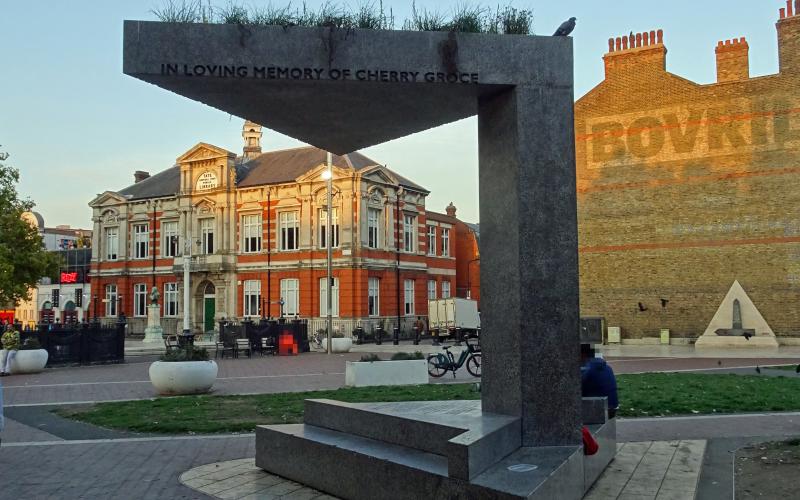
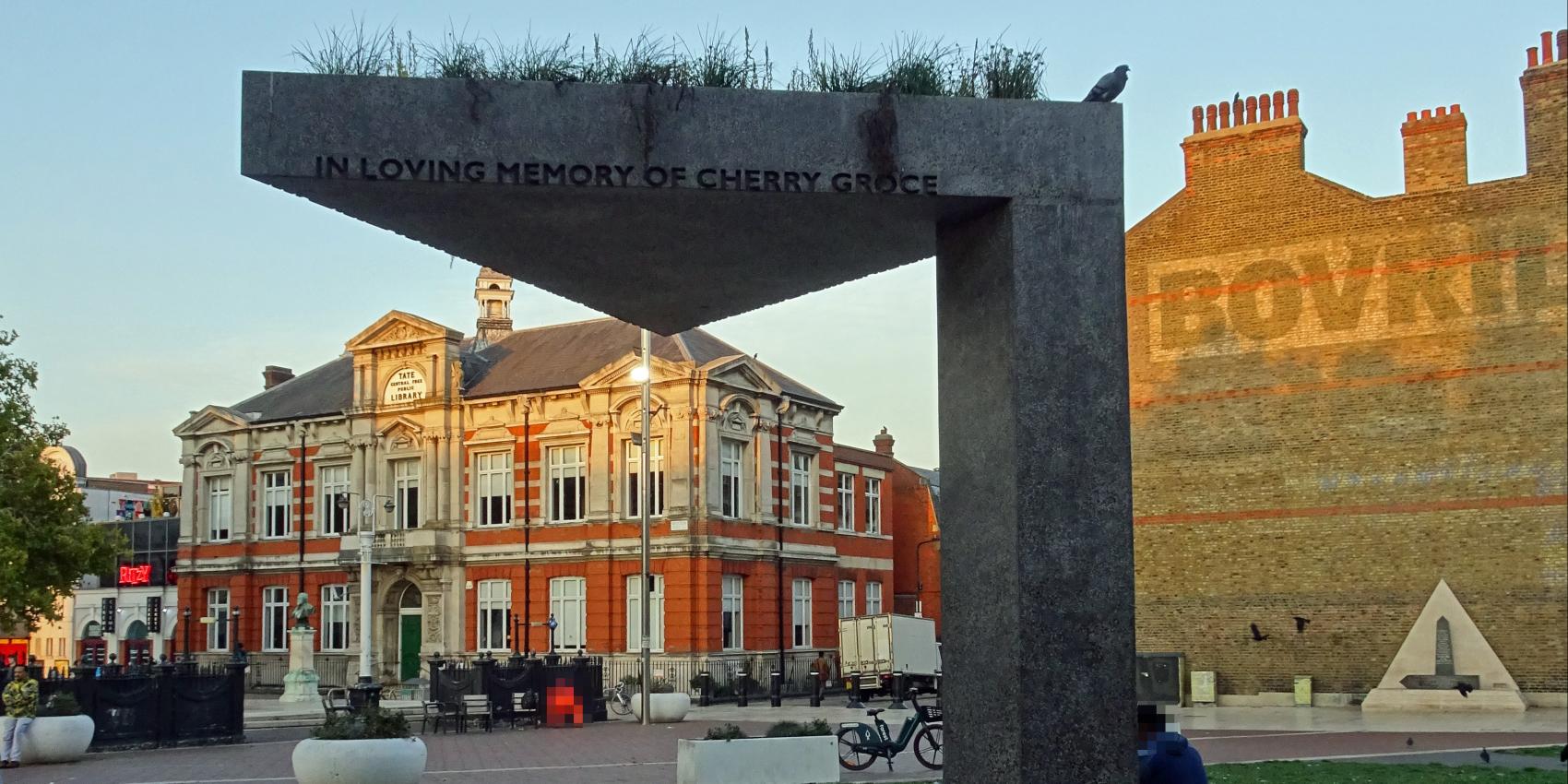
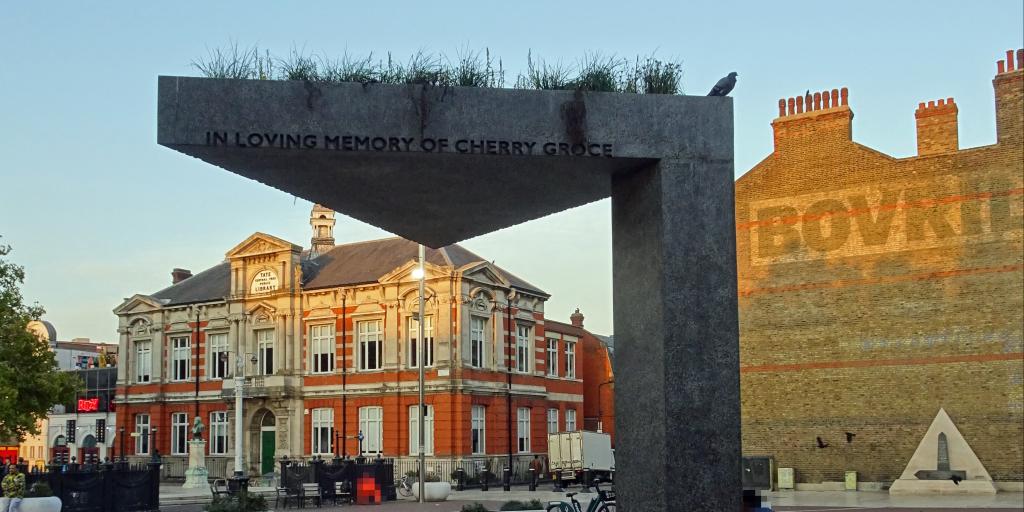
During the 1980s, these unadressed issues became the source of major social and political confrontations. The Thatcher governement had come to power in 1979 with an ‘authoritarian populism’[11] that combined the dual hatred of ‘elites’ (in particular social-democratic and trade union leaders) and ‘others’ (especially postcolonial migrants with a working-class background) with the authoritarian call for more executive powers. In this political climate, repressive approaches to policing, which had already been pushed forward by previous Conservative and Labour governments, further intensified. Most notably, the Metropolitan Police put a stronger focus on large-scale operations such as ‘Operation Swamp’ (April 1981), a major stop-and-search campaign in Brixton, a working-class area in South London with a large Black community. Over the course of that campaign, tensions between police forces and local residents culminated in large-scale urban unrest. This was not the last time that local conflicts over police operations in London would escalate. During a police raid on a private home in Brixton in September 1985, a police officer shot and permantly paralyzed the 37-year old Black woman Dorothy Groce. One week later, the police carried out a similar raid on a private home in Tottenham, a racially diverse working class neighbourhood in north London. During the raid, the 49-year-old Black woman Cynthia Jarrett died from a heart attack under contentious circumstances. Both incidents led to widespread protest activities organized by family justice campaigns and local community groups. Furthermore, they became the catalyst for major riots in Brixton and Tottenham.The Tottenham riot was historically unprecented because it became the setting for a brutal incident: On the night of 6 October, a group of people murdered the 40-year-old police officer Keith Blakelock, who was deployed to the local Broadwater Farm Estate. Following the riots, the government and police sent a clear message: In the mid- to late 1980s, large numbers of police forces were stationed in Tottenham and hundreds of local residents were arrested, many of whom were not charged with a crime.[12] In March 1987, three suspects were found guilty of the murder of Blakelock. In November 1991, however, the Court of Appeal ruled that the police investigation entailed crucial flaws, and the court overruled all three convictions.
For community-based organizations in Tottenham, Brixton and elsewhere, aftermath of the 1985 riots was a historical low point with minimal possibilities to publicly address the issues of police misconduct and institutional racism. This was echoed by public intellectuals such as Stuart Hall, who in the late 1980s wrote about a “hard road to renewal”[13] in light on the ongoing dominance of Thatcherism. At that time, then, the prospect of a public inquiry that would seriously look into the issue of institutional racism in the British police was largely unimaginable.

New Labour and Macpherson: Limited reform efforts, unaddressed concerns
In retrospect, however, it is possible to retrace the paths that had led from the polarized political climate of the mid- to late 1980s to the “Macpherson moment” in the late 1990s. The Conservative Party did not contribute to this development, as it continued its Thatcherite approach to policing, crime and ‘race relations’ throughout the 1990s. More important was the changing relationship between anti-racist movements and the Labour Party. Following the devastating experiences of 1981 and 1985, a growing number of activists and campaigners argued that community-based responses to police misconduct and institutional racism would only be successful if supported by legislative and institutional reform efforts. As a result, new initiatives emerged to strengthen minority self-representation and anti-racist positions within the Labour Party.[14] While the Labour leadership of the 1980s and early 1990s remained opposed to such initiatives, the New Labour leadership became more responsive to them. More specifically, it embraced multi-culturalism and anti-discrimination as key values and preconditions for the renewal of British society after a decade of crisis and confrontation. At the same time, however, its reform agenda remained limited in various regards, focusing primarily on building “trust and confidence between all sections of the community and the police”[15] and dealing with individual cases of “officers who fall short of what is expected of them”[16]. Furthermore, the New Labour leadership continued to favour a repressive approach to urban policing, promising to provide police forces with “better and more effective powers to tackle crime reduction and disorder”.[17] It thus failed to address broader issues, such as how the racialized public discourse about ‘crime’ and ‘disorder’ affects the goals and routines of urban policing.
The Stephen Lawrence Inquiry was carried out in exactly this spirit. On the one hand, it formulated a forceful critique of the police investigation into the racist murder of Stephen Lawrence as being “marred by a combination of professional incompetence, institutional racism and a failure of leadership by senior officers”.[18] On the other hand, it promoted a limited definition of institutional racism that was reduced to the problem of ‘lack of service’, but did not explicitly engage with the problem of police violence in its different forms. This limited diagnosis of the problem also influenced its reform agenda: The long list of recommendations at the end of the Macpherson Report focuses on educational measures and community engagement, but does not suggest more substantial changes to the organizational structure and political embeddedness of policing. Overall, then, the Macpherson Report was an expression of the changing relations of forces in the post-Thatcherite conjuncture. While its official acknowlegement of institutional racism was indeed a historical turning point, its diagnosis was clearly aligned with – and constrained by – the political agenda of the New Labour project. This is one of the reasons why its impact was limited in terms of addressing institutional racism in law enforcement and the criminal justice system.
[1] William Macpherson, Report of the Stephen Lawrence Inquiry, London 1999, Paragraph 6.39, https://assets.publishing.service.gov.uk/media/5a7c2af540f0b645ba3c7202/4262.pdf.
[2] Ebd., Paragraph 6.34.
[3] See Kien Nghi Ha, Das Pogrom in Rostock-Lichtenhagen als institutionalisierter Rassismus. In: Gudrun Heinrich, David Jünge, Oliver Plessow & Cornelia Sylla (Ed.), Kulturen des Verdrängens und Erinnerns. Perspektiven auf die rassistische Gewalt in Rostock-Lichtenhagen 1992. Berlin 2024, p. 77–94.
[4] See Pascal Dengler & Naika Foroutan, Die Aufarbeitung des NSU als Deutscher Stephen-Lawrence-Moment? Thematisierung von institutionellem Rassismus in Deutschland und Großbritannien. In: Karim Fereidooni & Meral El (Ed.), Rassismuskritik und Widerstandsformen, Wiesbaden 2017, p. 429–446.
[5] Baroness Casey of Blackstock, The Baroness Casey Review: An independent review into the standards of behaviour and internal culture of the Metropolitan Police Service, London 2023, https://www.met.police.uk/SysSiteAssets/media/downloads/met/about-us/baroness-casey-review/update-march-2023/baroness-casey-review-march-2023a.pdf.
[6] See Martin Shiner, Post-Lawrence Policing in England and Wales: Guilt, Innocence and the Defence of Organizational Ego. British Journal of Criminology 50 (2010), p. 935–953.
[7] For a more detailed account of the argument presented here, see Helge Petersen, The ambivalence of the “Macpherson moment”: re-examining the political struggles following the racist murder of Stephen Lawrence, Ethnic and Racial Studies 2025.
[8] See Derek Humphry, Police Power and Black People. London 1972.
[9] See Benjamin Bowling, Violent Racism: Victimization, Policing and Social Context. Oxford 1998, p. 23–57.
[10] See Kalbir Shukra, The Changing Pattern of Black Politics in Britain, London 1998, p. 9–26.
[11] See Stuart Hall, Popular-Democratic vs Authoritarian Populism: Two Ways of ‚Taking Democracy Seriously‘. In: Ibid.: The Hard Road to Renewal: Thatcherism and the Crisis of the Left, London/New York 1988.
[12] See Anthony Gifford, The Broadwater Farm Inquiry. London 1986, p. 22; David Hearst, Broadwater chief attacks police investigating police, The Guardian 17 April 1986, p. 4.
[13] Stuart Hall, Blue Election, Election Blues. In: Ibid.: The Hard Road to Renewal, p. 267.
[14] See Les Back, Michael Keith, Kalbir Skukra & John Solomos, The Unfinished Politics of Race: Histories of Political Participation, Migration, and Multiculturalism, Cambridge 2023, p. 108–135.
[15] Jack Straw, Parliamentary Speech, House of Commons Debate on 04 November 1997, Hansard Vol. 300, 1146. https://hansard.parliament.uk/Commons/1997-11-04/debates/dea51d34-9220-4a09-8190-54e74a99ab97/PolicingOfLondon.
[16] Ibid.
[17] Ibid., 1147.
[18] Macpherson, Report of the Stephen Lawrence Inquiry, Paragraph 46.1.
Zitation
Helge Petersen, The hard road to Macpherson. Political conflicts over police violence and institutional racism in Britain between the 1970s and 1990s, in: zeitgeschichte|online, , URL: https://www.zeitgeschichte-online.de/themen/hard-road-macpherson